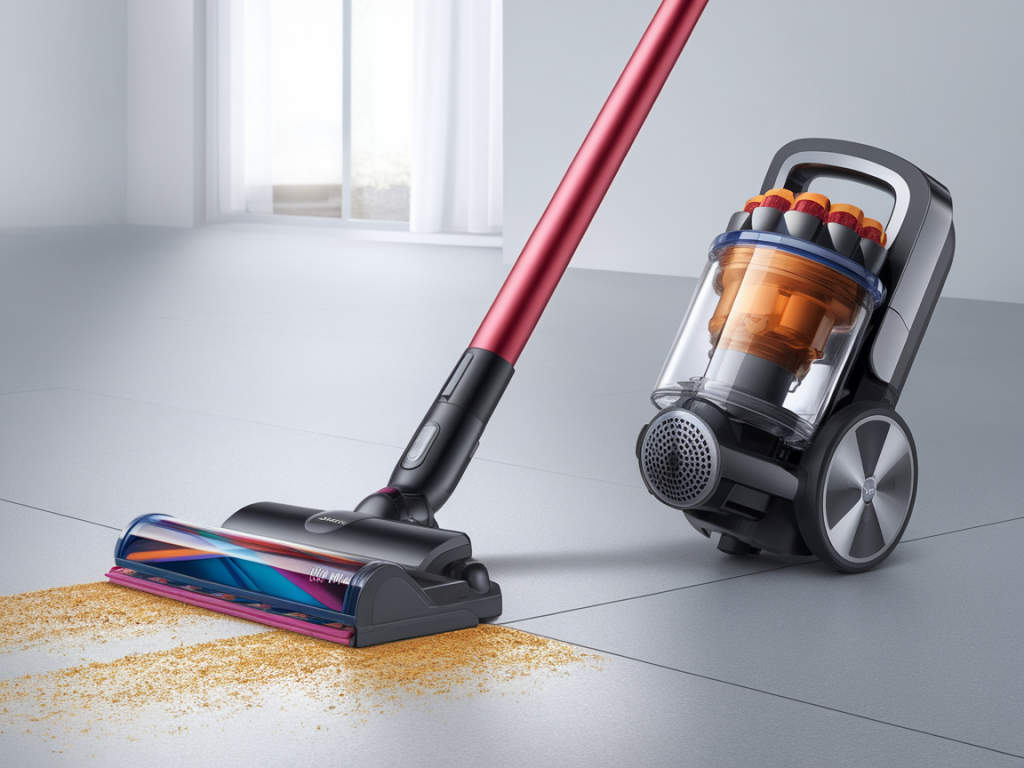
I recently put the Dreame H12 Pro FlexReach through a series of real-life scenarios to evaluate how it performs as a hybrid vacuum and mop. My goal was to conduct a thorough test du aspirateur laveur flexible innovant that would give readers on Leader Agency — many of whom care about innovation and productivity — a clear, practical picture of whether this device deserves a place in a modern home or a small office.
Why this test matters
As someone who writes about innovation and practical tools that save time, I consider cleaning devices through the lens of efficiency, design intelligence and long-term value. The Dreame H12 Pro FlexReach markets itself on flexibility and autonomy: a cordless design, wet mopping and vacuuming combination, and a self-cleaning base. I wanted to test those claims against everyday realities: pet hair, coffee spills, high-traffic tile, and delicate hard floors.
Initial impressions and unboxing
Out of the box, the H12 Pro FlexReach felt premium. Build quality is solid, materials are modern, and the assembly was straightforward. The unit is heavier than stick vacuums that are vacuum-only, but the weight feels balanced thanks to the flexible handle and swivel head. The LED indicators and user-friendly controls made it easy to start testing quickly.
Key specifications (at a glance)
| Model | Dreame H12 Pro FlexReach |
| Type | Cordless wet + dry vacuum (stick) |
| Battery | Removable lithium-ion, runtime ~35–45 min (depending on mode) |
| Suction power | Strong suction with multiple modes (up to around 25–30 kPa reported) |
| Water tanks | Separate clean and dirty water tanks; self-cleaning dock |
| Weight | Heavier than ultra-light sticks, but under typical wet/dry hybrids |
Test scenarios and results
I divided my evaluation into a series of scenarios that reflect common user needs:
Self-cleaning dock and maintenance
One of the most appealing features is the self-cleaning dock. After a cleaning session, the unit automatically rinses the brush and flushes the dirty water tank. In practice, this reduces the gross, hands-on maintenance that often discourages people from using wet/dry combos daily.
However, the dock isn’t magic: you still need to empty the dirty water tank periodically and check filters for hair tangles. I appreciated the design decisions that make these tasks obvious and accessible — no tools required.
Battery life, noise and ergonomics
Battery life is realistic and depends heavily on mode and whether you’re using suction plus mopping simultaneously. In a mixed-use scenario (vacuum + mop), I achieved around 30–35 minutes, enough for a medium-sized apartment. Replacing the battery or topping up the charge is straightforward thanks to the removable battery pack.
Noise levels are comparable to other powerful cordless cleaners: noticeable, but not overly disruptive for short cleaning sessions. The handle and swivel head make maneuvering around furniture intuitive; the “FlexReach” articulation is genuinely useful when reaching under sofas or beds.
What I liked most
What could be better
Who should consider buying the Dreame H12 Pro FlexReach
If you value time savings and live in a home with mostly hard floors — or a mix of hard floors and low-pile rugs — this device is attractive. Entrepreneurs and busy professionals who prioritize efficient, automated household tasks will appreciate the self-cleaning aspect and the two-in-one functionality. For offices with light foot traffic, the H12 Pro FlexReach is a practical cleaning assistant that reduces the need for separate vacuum and mop tools.
Practical tips from my test
Throughout this test du aspirateur laveur flexible innovant, I found the Dreame H12 Pro FlexReach to be a cleverly designed tool that responds to modern users’ needs for convenience and cleanliness. It isn’t flawless — no hybrid device is — but for its intended use cases it performs impressively and justifies consideration for anyone looking to modernize their cleaning routine without adding complexity.