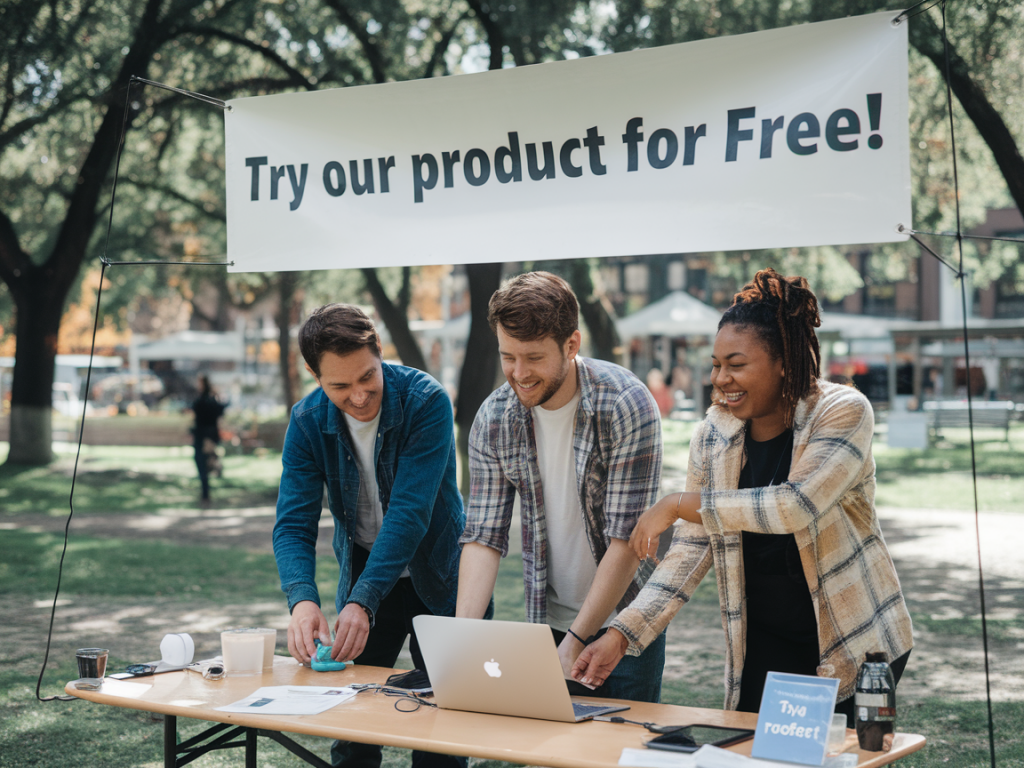
I’m often asked by early-stage subscription SaaS founders: “How can I test product-market fit quickly and cheaply when I don’t have a thousand users yet?” I’ve been there — bootstrapping a product, hungry for clarity, but short on budget and real estate in users’ inboxes. Below I share three low-cost, high-learning marketing experiments I recommend. Each one is designed to validate key PMF hypotheses (value, willingness to pay, retention) with fewer than 1,000 users and under modest budgets.
Experiment 1: Targeted landing page + micro-ads to test demand and willingness to pay
This is my go-to when I want to know if a specific value proposition resonates and whether people will click through to pay. It’s fast, measurable, and scalable from $50 to $500.
Why it works: You get a conversion funnel (impressions → clicks → signups → paid conversions) that directly tests messaging and pricing before you build full acquisition channels.
How to run it (step-by-step):
Choose a single hypothesis — e.g., “Freemium coaches will pay $29/month for automated client reporting.”Create a focused landing page that highlights one pain, one solution, and one CTA. Use simple builders: Webflow, Carrd, Unbounce, or even a GitHub Pages static page. Keep load time fast and copy crisp.Include pricing options and a “Start trial” or “Join waitlist — pay later” CTA. If you can accept payments, integrate Stripe Checkout or Gumroad to test willingness to pay; otherwise use a pre-order or refundable token to simulate commitment.Drive traffic with low-cost micro-ads: LinkedIn text ads (if targeting B2B), Facebook/Instagram interest ads, or Twitter/X. Start with $5–$20/day for 3–7 days and test multiple creatives.Track conversions with Google Analytics, Facebook Pixel, and UTM parameters. Measure CTR, landing page conversion rate, and paid conversion rate.Key metrics to watch:
CTR from ad to landing page > 1% (varies by channel and audience).Landing page conversion (email signup or paid intent) > 8–15% for strong interest.Paid conversion or pre-order rate — even a 1–3% paid conversion from cold traffic is meaningful for niche B2B SaaS.Estimated cost and timeline:
Landing page + simple copy: $0–$150 (DIY or small freelance).Ads: $50–$500 depending on duration and channels.Time: 1–2 weeks to set up, 1 week to run, then analyze.Experiment 2: Concierge onboarding + paid pilot to validate retention and value delivery
Once you get signups, the next question is: will users keep paying? The concierge model (manually delivering the core promise) lets you test retention and uncover stickiness reasons before building automation.
Why it works: You replace tech with human work to deliver the product’s core outcome. If users repeatedly return and pay, the value is real. If they churn, you learn why.
How to run it (step-by-step):
Recruit 20–100 beta customers from your landing page waitlist, cold outreach, or relevant communities (Indie Hackers, Reddit, Product Hunt groups, LinkedIn).Offer a short paid pilot (e.g., $50–$200 for 30 days) in exchange for feedback and active participation. Emphasize limited slots and that they’ll get premium support.Deliver the service manually. For a SaaS analytics tool, compile the reports yourself and send weekly insights. For a workflow automation product, manually run the automations and share the outcomes.Build a simple onboarding survey and weekly NPS-style check-ins to capture qualitative and quantitative feedback.Measure retention across the pilot and ask for a commitment to continue at the regular price after the pilot ends.Key metrics to watch:
Weekly active usage or engagement rate during the pilot.Percent of pilot customers who agree to continue paying after the pilot (this directly measures willingness to pay and perceived value).Churn reasons and feature requests — track them categorically.Estimated cost and timeline:
Human time — the main investment (you or team members doing manual delivery).Incentives: small discounts or free months for early adopters ($0–$2,000 depending on scale).Time: 4–8 weeks to run an informative pilot and collect retention data.Experiment 3: Content-led acquisition + low-cost webinar or cohort to test audience fit and monetization
When product-market fit depends on educating a market (complex B2B tools, developer platforms), content and cohorts are powerful. A webinar or short paid cohort lets you test whether your audience sees value and will pay for deeper access.
Why it works: You validate both acquisition (how many people sign up for content) and conversion (how many convert to paid). Plus you build demos, case studies, and user stories you can reuse.
How to run it (step-by-step):
Create a high-value webinar or 2–4 session cohort that teaches one outcome your product promises (e.g., “How to cut client reporting time by 70% using X workflows”).Promote through organic channels (your LinkedIn network, targeted Slack communities, relevant subreddits) and with modest ad spend ($50–$300). Invite influencers or friendly partners to cohost for reach.Use a booking tool (Calendly, Demio, Zoom with registration) and require an email to register. Offer an optional small paid upgrade (e.g., $20–$100) for a follow-up workbook, templates, or an extended Q&A/implementation session.During the webinar/cohort, present a live demo, share case examples, and offer a limited-time discounted subscription or trial to attendees.Key metrics to watch:
Registration-to-attendance rate (aim for 30–50%).Attendance-to-paid upgrade or conversion (>5–10% for a strong funnel).Post-webinar activation: how many attendees start using the product and become active users within two weeks.Estimated cost and timeline:
Content creation and hosting: mostly time; tools $0–$50/month.Promotion: $50–$500 depending on whether you use paid ads or partner promotions.Time: 2–4 weeks to promote, run, and analyze. | Experiment | Primary goal | Typical budget | Key metric |
| Landing page + micro-ads | Demand + willingness to pay | $50–$500 | Paid conversion rate / signups |
| Concierge onboarding pilot | Retention + value delivery | Mostly time + $0–$2,000 incentives | Percent continuing to pay after pilot |
| Content + webinar/cohort | Audience fit + monetization | $50–$500 | Attendance-to-paid conversion |
Practical copy snippets and sample offers
For the landing page CTA (ads → page):
Headline: “Cut client reporting time by 70% — Start a 14-day trial”Subhead: “Automated reports, actionable insights, and templates built for busy consultants. Sign up now — limited beta pricing.”CTA: “Join beta for $29/month (20 spots left)”For the concierge pilot outreach:
Email subject: “Would you test a hands-on reporting pilot? Limited paid spots”Body snippet: “I’ll personally prepare weekly client reports for the next 30 days. You’ll get tailored insights and a short interview to help shape the product. $99 for 30 days.”For webinar promo:
Hook: “Live: How to transform reporting from chore to revenue driver — 60 minutes (includes templates)”Offer: “Attendees get a 25% discount on our early plan for one month.”Final tips from my experience
Don’t try to test everything at once. Run one experiment at a time, iterate quickly, and treat every interaction as product research. Qualitative feedback (direct calls, recorded sessions, annotated notes) is as valuable as quantitative metrics at this stage. Keep the experiments cheap but human-centered — the insights you get from a hundred engaged users will beat vanity metrics from thousands of uninterested visitors.
If you want, I can help draft your landing page copy, a sample ad set, or a pilot outreach email tailored to your SaaS niche. Tell me your target customer and the one sentence value prop you’re testing, and I’ll sketch the first experiment for you.